
Music theory serves as the foundational language through which composers, performers, and educators communicate musical ideas across centuries and cultures. Students who begin their theoretical studies during childhood develop enhanced cognitive abilities, including pattern recognition, mathematical reasoning, and spatial-temporal skills that extend far beyond musical applications. Early exposure to harmonic structures, rhythmic patterns, and formal analysis creates neural pathways that strengthen both creative expression and analytical thinking throughout a student’s lifetime.
Throughout the academy’s history, nearly all of our highest achieving musicians supplemented their private lesson studies with music theory classes. Extensive knowledge and practice in theory, ear training, and rhythm allowed these students to progress quicker and gave them a competitive advantage in youth orchestra auditions, competitions, and college admissions, earning them Concertmaster and Principal positions in prestigious youth orchestras and admittance into Juilliard, Peabody Conservatory, New England Conservatory of Music and other leading music institutions.
Building a Strong Foundation in Musical Literacy
Understanding music theory transforms students from passive listeners into active participants who can decode the structure behind every piece. Young learners who grasp concepts like intervals, scales, and chord progressions gain immediate advantages in their instrumental studies. They recognize patterns more quickly, memorize repertoire with greater efficiency, and troubleshoot technical challenges by understanding the underlying harmonic logic.
Theory instruction provides the vocabulary needed to communicate with faculty, fellow musicians, and conductors. Students who can identify a passing tone or explain a modulation engage more deeply with rehearsals and lessons. This literacy becomes invaluable during auditions, where students can demonstrate through their playing a stronger grasp over passages and holistic understanding of a work.
Cognitive Development Through Musical Structure
Research also demonstrates that children studying music theory show improved performance in mathematics, particularly in fractions, ratios, and proportional reasoning. Rhythmic notation directly correlates with mathematical concepts, as students calculate note values and divide measures into equal parts. These skills transfer seamlessly to academic subjects, giving young musicians an edge in standardized testing and problem-solving scenarios.
Pattern recognition abilities flourish through theoretical study. Analyzing phrases, identifying sequences, and predicting harmonic progressions all require students to detect relationships and anticipate outcomes. Brain imaging studies reveal that musicians process information differently than non-musicians, with enhanced connectivity between regions responsible for auditory processing, motor control, and executive function.
Enhanced Performance Capabilities
Performers with theoretical training approach repertoire with strategic intelligence rather than relying solely on repetition. They identify difficult passages by their harmonic function, understand why composers chose specific voice leading, and make informed decisions about fingering, bowing, or dynamics based on structural analysis. Theory knowledge accelerates the learning process and through experience reduces practice time needed to achieve performance readiness.
Sight-reading abilities improve dramatically when students recognize common progressions and cadential patterns. Instead of processing each note individually, theoretically trained musicians chunk information into meaningful units. A I-IV-V-I progression becomes a single gesture rather than four separate chords, allowing for fluent reading at faster tempos.
Creative Expression and Composition Skills
Young students who understand theoretical concepts gain the tools to express their own musical ideas. Composition instruction no longer seems mysterious or reserved for “geniuses”—it becomes an accessible art with learnable techniques. Children can experiment with melody writing, harmonization, and form while understanding the principles that make their creations effective.
Improvisation skills develop naturally from theoretical knowledge. Jazz musicians rely heavily on understanding scales, chord extensions, and substitutions to create spontaneous solos. Classical pianists who grasp figured bass notation can realize continuo parts or elaborate simple melodies. Theory transforms passive musicians into active creators who can respond musically in real-time situations.
Long-Term Advantages
Professional musicians face rigorous entrance examinations for conservatories, university programs, and orchestral positions. For students with a desire to pursue music as a career, theory proficiency separates candidates in competitive auditions where technical ability alone proves insufficient. Many institutions require placement exams covering harmony, counterpoint, and analysis—students with early training enter advanced courses immediately while others spend years completing prerequisites.
Progress happens incrementally, and parents should maintain realistic expectations. Students won’t master all concepts immediately, but consistent exposure creates cumulative understanding. Celebrating small victories—correctly identifying a cadence, successfully harmonizing a phrase, or analyzing a familiar piece—builds confidence and motivation for continued study.
Studying Music Theory at WPMA
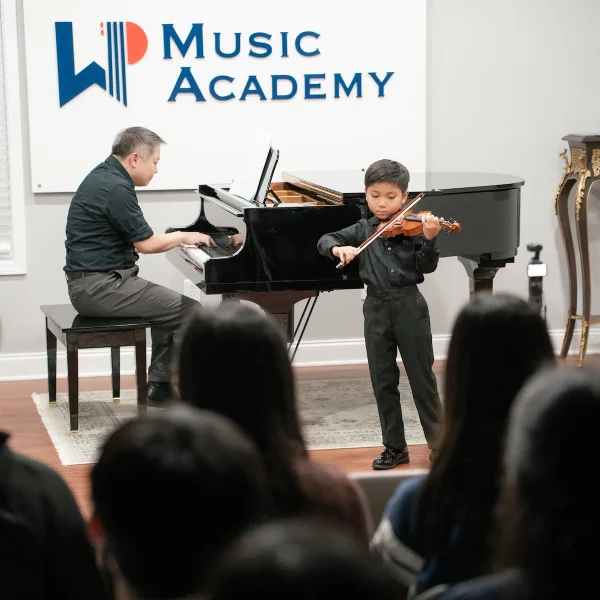
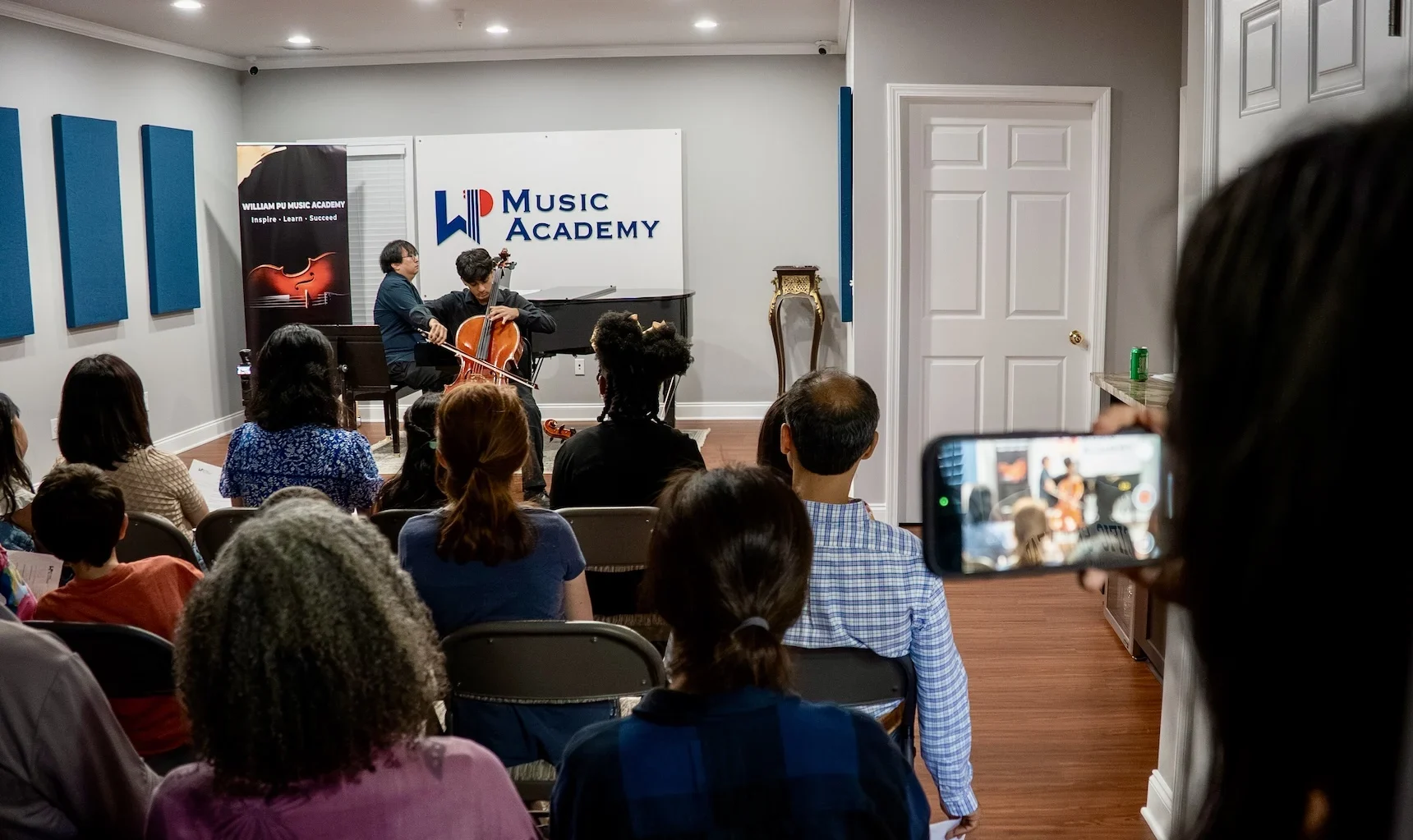
Learn more about the music theory offerings available for students at WPMA here. Between our private and group theory offerings, more than half of our students compliment their private instrument studies with theory lessons in addition to participating in chamber, youth ensembles, master and studio classes at WPMA.